
Monroe County Criminal Court Records
A criminal court record is the case file created after a charge enters court. In Monroe County, Circuit Clerk Wesley Hines is the official record keeper and business manager for the District and Circuit Courts. The criminal division may keep the complaint, arrest warrant after service, bond, plea, docket entries, motions, orders, disposition, sentence, probation terms, and financial obligations. These are court records, not just law enforcement arrest papers. A closer look at the accusation appears in the Monroe County arrest records and court charges resource.
Venue shapes the file. Monroe County District Court handles many misdemeanors and preliminary matters. Circuit Court, part of Alabama's 35th Judicial Circuit, is the higher general trial court and handles felony cases. Municipal courts normally handle misdemeanors committed inside Monroeville or Excel city limits unless the same incident includes a felony or an extraordinary circumstance applies. District and Circuit criminal records route through the Circuit Clerk, while a city case must be checked with the municipal court that heard it.
The arresting agency, magistrate, prosecutor, and court each create a different part of the record. Law enforcement prepares the incident report. A neutral magistrate reviews probable cause when a warrant is requested. The District Attorney decides how a prosecution proceeds after charges reach court, and the clerk records the filed papers and court events. For that reason, a sheriff report may not show a later amendment, dismissal, plea, or sentence. The court file is the source for those later case results.
Search Monroe County Criminal Records
Start with the Monroe County electronic docket search for a free view of matters set on a selected date. It fixes the county as location 58, requires a setting date, and accepts an optional last name. Leaving the name blank returns the full docket for that date. This tool is not a full case-file download. Its own notice says some cases may not appear electronically.
- Check the public docket by setting date and optional defendant last name.
- Use Alacourt Access or Just One Look for a name or case-number path to paid case details and images.
- Confirm the court level and criminal division before reading the entries.
- Trace the charge through plea, orders, disposition, and sentence.
- Ask the Circuit Clerk when a case is missing or a certified copy is needed.
The fallback is Circuit Clerk Room 220, 65 North Alabama Avenue, Monroeville, Alabama 36460, at (251) 743-2283. The counter is open from 8:00 a.m. to 4:00 p.m., Monday through Friday. Older records and files missing from the electronic docket may require clerk help. Just One Look is case by case; Alacourt.com offers read-only subscription access to Alabama trial court records.
Name searches can locate possible matches, but a case number is safer once it is known. Confirm the defendant, filing court, division, and dates before treating a result as the right Monroe County criminal file. The free docket is date based, so it works best for a known court setting. A paid record or clerk request is the better route for pleadings, document images, and the final sentencing order.
When requesting a copy, identify the exact document instead of asking only for a criminal record. A charging paper shows the accusation, a docket lists events, a disposition states the result, and a sentencing order gives the court's terms. Ask whether the copy is plain or certified and confirm the lawful fee before paying. The research does not publish a full Monroe County copy-fee schedule, so filing fees should not be used as substitutes for copy charges.
Monroe County Criminal Case Flow
Each stage adds a new entry or paper to the Monroe County criminal record. The sequence may change if a charge is dismissed, reduced, or transferred. A warrant and bond can precede formal court events. The arraignment records the plea, pretrial entries show litigation before trial, and the disposition states how the case or each count ended.
Case flow: Charges Filed → Arraignment → Pretrial → Plea or Trial → Disposition → Sentencing
At arraignment, the charge is stated and a plea is recorded. Pretrial entries capture motions, hearings, continuances, bond issues, and orders. A plea or trial produces findings, while disposition and sentencing entries record the outcome and its terms.
What Monroe County Criminal Records Show
Read fields together, not in isolation. A filed charge does not establish guilt, and the first charge label may not match the final result. The case number is the best reference when contacting the clerk. Docket entries supply the time line, while document images may require paid access or a request to the court.
| Field | What It Shows |
|---|---|
| Case number | The unique court reference assigned after filing. |
| Court and division | District, Circuit, or Municipal venue and criminal division. |
| Defendant | The person accused in the criminal case. |
| Charges | Each accusation filed and later amendments when recorded. |
| Plea and events | The plea plus hearings, motions, bond, and orders. |
| Disposition | The current or final result for the case or each count. |
| Sentence | Custody, probation, costs, fines, or other ordered terms. |
Monroe County Charges and Convictions
A charge is an accusation. A conviction is a final result based on a guilty plea or finding of guilt. Monroe County criminal court records can retain charges that were dismissed, amended, no-billed, or resolved by acquittal. Match each count to its own disposition instead of treating the arrest or initial complaint as the outcome.
| Charge | Conviction | |
|---|---|---|
| Stage | Formal accusation | Final finding or plea |
| Legal threshold | May begin after probable cause | Requires guilt by plea or proof |
| Meaning | May end without guilt | Records a guilty outcome |
Read Monroe County Case Outcomes
Disposition means the current or final outcome. An entry may say guilty, not guilty, dismissed, or acquitted, or show that a charge changed before judgment. Read every count because one case can have several results. Then check sentencing entries for custody, probation, financial obligations, and special conditions. A bond amount is not a fine, and a hearing date is not a disposition. If a short docket code is unclear, ask the Circuit Clerk for the matching order.
The PACER system is separate and covers federal records, not Monroe County state prosecutions.
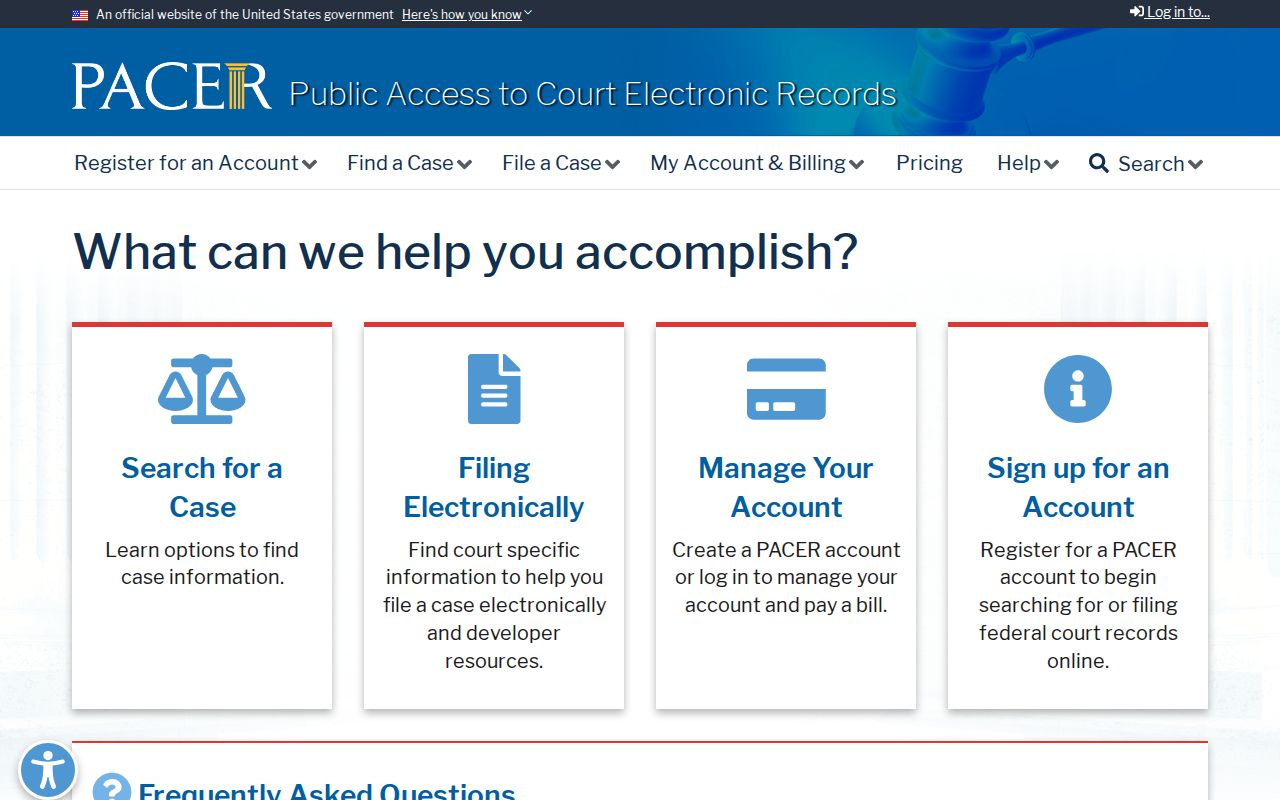
Use PACER only when the offense was prosecuted in federal court; ordinary Monroe County criminal cases stay in Alabama trial courts.
Sealed and Expunged Criminal Records
Sealing and expungement both restrict public view, but neither is a simple online deletion. Alabama expungement is a court process under Ala. Code § 15-27-1 et seq. A petitioner identifies the case, charge, agency, disposition, and court, then files supporting material in the court that handled the matter. Eligibility varies by the facts and outcome.
| Sealed | Expunged | |
|---|---|---|
| Public view | Hidden by law or court order | Removed from ordinary public access |
| Official access | May remain for authorized purposes | Follows limits in the expungement order |
| Process | Governing law or court order | Petition and eligibility under Alabama law |
Public Monroe County Criminal Records
Alabama law supports inspection and copying of public records, but court rules and confidentiality laws still control each file. Access does not override a seal, expungement order, juvenile confidentiality, youthful-offender limits, or protected personal data. The Circuit Clerk handles Monroe County District and Circuit criminal files; municipal clerks handle their own city cases.
Key Statutes:
Ala. Code § 36-12-40 gives Alabama citizens a right to inspect and copy public records unless another law creates an exception.
Ala. Code §§ 36-12-43 to 36-12-46 set request, clarification, timing, and response procedures.
Federal Records for Monroe County
A federal case does not appear as a Monroe County Circuit Court file. Monroe County lies in the U.S. District Court for the Southern District of Alabama. Federal appellate matters route to the Eleventh Circuit, and bankruptcy files use the Southern District bankruptcy CM/ECF system.
The Southern District bankruptcy CM/ECF lookup is the official source for that court.
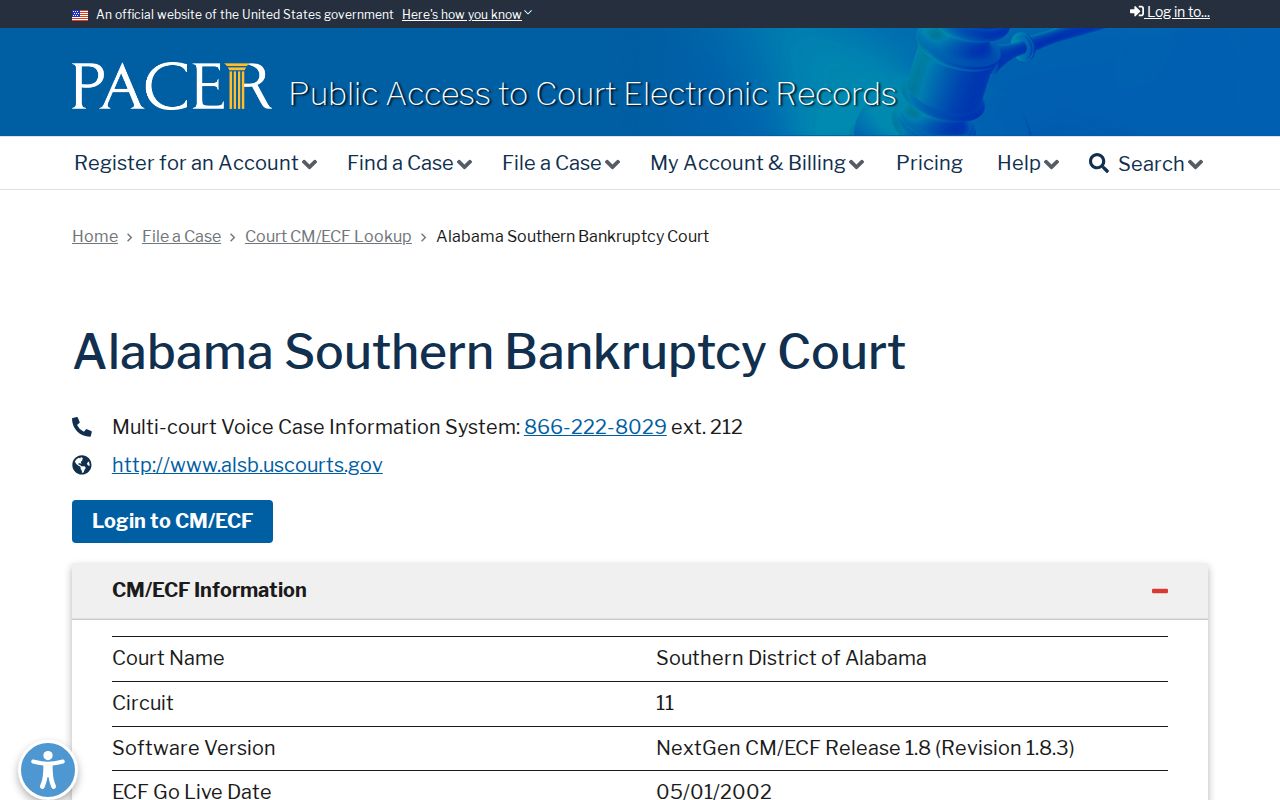
This distinct federal portal shows why the court and jurisdiction must be confirmed before a records request.
Important: Public case access is not an FCRA-compliant consumer report and cannot be used for regulated screening decisions.
Restricted Monroe County Criminal Records
Juvenile files are confidential under Ala. Code § 12-15-133 except for access allowed by law or court order. Youthful-offender matters, sealed and expunged cases, victim safety addresses, minor names, account numbers, and other protected identifiers may be hidden or redacted. An arrest warrant is not public in Monroe County until it has been served. A blank search result cannot prove that no matter ever existed.
Defendants who cannot afford counsel should ask at first appearance or arraignment about appointed counsel and indigency procedures. The clerk can provide records and forms but cannot give legal advice. District Attorney Steve Wadlington handles prosecution after charges enter court; Monroe AOC lists (251) 575-2067 for Monroeville and (251) 578-4977 for Evergreen.
A defendant seeking appointed counsel should raise the issue with the court, not treat the District Attorney or clerk as defense counsel. The supplied research did not identify a separate official Monroe County public-defender webpage. That gap does not eliminate the court-based appointment process. It means no unsupported local office name, address, or private referral should be added to the record-access instructions.